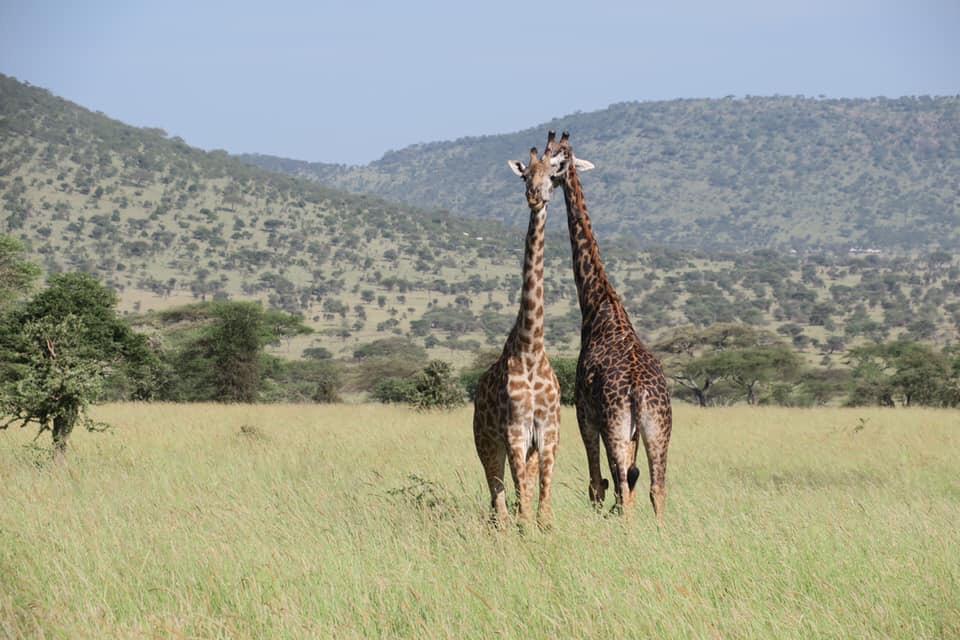
The safari that ruins all other safaris — seven mornings on the greatest stage on earth, where the grass moves and you realise it isn't grass. This is not a package. This is a reckoning.
Each park is a world unto itself. Together they form the most complete wildlife narrative in Africa.
Every year, 1.5 million wildebeest, 200,000 zebra, and 500,000 Thomson's gazelle make a circuit across the Serengeti-Mara ecosystem — the greatest wildlife spectacle our planet produces.
With seven days and four nights in the Serengeti, you have the time and the positioning to witness it — whether that's the river crossings, the calving season, or the endless columns moving across open plains. This safari was built around it.
Seven mornings. Each one unlike the last. Each one impossible to forget.
You leave Arusha before sunrise. By mid-morning, you enter Tarangire — and the elephants appear in numbers that stop conversation.
This is the bridge day that changes the whole safari. You leave Tarangire behind, climb through the Ngorongoro highlands, and by afternoon the Serengeti opens in front of you.
Your first full Serengeti day belongs to the resident cats. This is when the seven-day starts to separate itself from shorter safaris: you are no longer passing through. You are hunting stories with time on your side.
Now that you are properly inside the park, the guide has freedom to follow movement rather than roads on a schedule. Day four is about depth: more ground covered, more behaviour observed, fewer compromises.
Day five is why this safari costs more. You are no longer doing a beautiful game drive. You are in position for the most dramatic wildlife event in Africa: pressure at the river's edge, crocodiles below, thousands of wildebeest building the nerve to jump.
Your last Serengeti morning still counts. We game drive on the way out, then leave the plains behind and climb back toward the Ngorongoro rim to set up a proper crater finale.
You finish with the crater because few endings in Africa can compete with it. One last descent, one last hunt for black rhino, one last impossible landscape before the road returns you to Arusha.
Seven days across three parks gives you Africa's best statistical odds of completing all five.
Different biomes. Different characters. Unified by the same ancient wildness.
Seven days, three parks — the same wild places, the same expert guides. What changes is the comfort you return to each night.
Safaris depart year-round. River crossings peak July–October. Calving season peaks January–March.
Click any date to open the booking form with your selected date pre-filled.